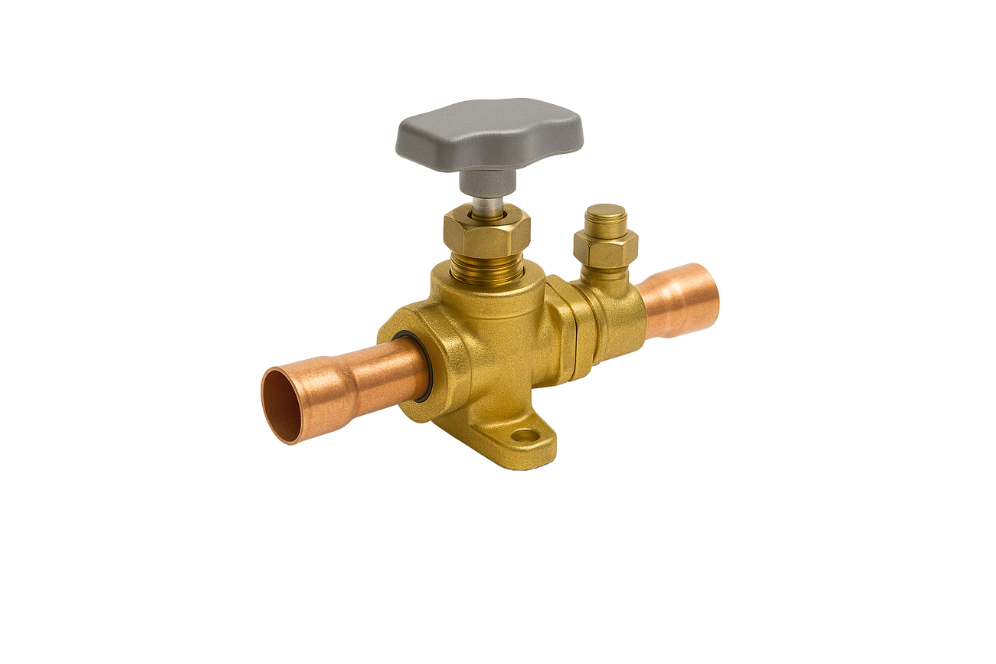
Inventure offers a comprehensive range of refrigerant valves and line components, designed to meet the requirements of modern HVAC and refrigeration systems. The range includes thermostatic and electronic expansion valves, solenoid valves, ball valves, check valves, angle seat valves, filter driers, sight glasses, pressure switches, regulators, accumulators, and receivers. These components are engineered to provide precise control, reliable flow regulation, and efficient protection of refrigerant circuits in both residential and commercial applications.
The valves and components are suitable for various systems, including air conditioners, VRF systems, chillers, heat pumps, industrial refrigeration, cold storage, and commercial HVAC installations. Key features include high durability, corrosion resistance, compatibility with multiple refrigerants (including eco-friendly and natural refrigerants), and modular designs for simplified maintenance. Sight glasses and moisture indicators allow real-time monitoring of refrigerant condition, while filter driers and strainers protect compressors and downstream equipment from contamination.
Electronic expansion valves (EEVs) provide precise load-adaptive control, improving energy efficiency, while solenoid and ball valves ensure safe isolation and on/off control. Modular valve stations integrate multiple functions in a compact unit, saving installation space and enabling faster servicing. With these features, Inventure’s refrigerant valves and line components enhance system reliability, minimize downtime, and extend equipment life, making them ideal for residential, commercial, and industrial cooling and heating solutions.
Product Range
1. Expansion Valves
Thermostatic Expansion Valves (TXV/TEV): Precisely regulate refrigerant flow based on system load, maintaining optimal cooling and heating performance.
Electronic Expansion Valves (EEV): Provide load-adaptive, energy-efficient control with high accuracy, improving overall system efficiency and reducing energy consumption.
2. Shut-Off & Flow Control Valves
Solenoid Valves: Enable safe, rapid on/off control of refrigerant flow, ensuring system protection and precise operation.
Ball Valves: Provide reliable isolation and robust manual control for maintenance or emergency shut-off.
Check Valves: Prevent backflow of refrigerant, protecting compressors and other critical components.
Angle Seat Valves: Allow smooth and durable flow control in HVAC and refrigeration systems with minimal pressure drop.
3. Line Protection Components
Filter Driers: Remove moisture and contaminants from refrigerant to protect sensitive system components.
Strainers: Prevent solid particles from entering the system, reducing wear and enhancing operational reliability.
Sight Glass with Moisture Indicator: Allows visual inspection of refrigerant flow and detection of moisture for timely maintenance.
4. Control & Regulation
Pressure Switches & Sensors: Monitor system pressures and provide alerts or automated control for safe operation.
Pressure Regulators (mainly Danfoss): Maintain consistent pressure levels for efficient and safe system performance.
Reversing Valves (4-Way Valves): Enable system switching between heating and cooling modes in heat pump applications.
5. Refrigerant Management Components
Accumulators: Capture excess liquid refrigerant to protect compressors and maintain stable operation.
Receivers: Store and supply refrigerant reliably to meet varying system demands.
Oil Control Valves: Ensure proper oil circulation and separation within the system to enhance compressor life.
6. Modular Valve Stations
Compact, integrated units combining multiple valve functions into a single assembly.
Save installation space, simplify piping, and allow faster servicing and maintenance.
An Industrial Process Chiller is made up of several essential components that work together to regulate temperature and ensure smooth operation. Each part plays a crucial role in the refrigeration cycle:
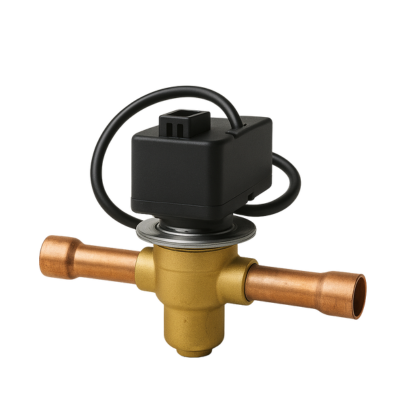
An Electronic Expansion Valve (EEV) is a high-precision device used in modern refrigeration and HVAC systems to regulate the flow of refrigerant into the evaporator. Unlike traditional mechanical valves, EEVs respond to electronic signals from temperature and pressure sensors, enabling dynamic and accurate control of superheat levels. This results in enhanced energy efficiency, faster system response, and improved temperature stability, even under varying load conditions.
EEVs are ideal for applications that demand consistent performance and tight control—such as commercial refrigeration units, VRF systems, chillers, and data centre cooling setups. Built for compatibility with smart controllers, these valves help optimise system operation and reduce energy costs. Their compact design, low maintenance needs, and remote programmability make Electronic Expansion Valves a preferred choice for advanced and energy-efficient cooling systems.
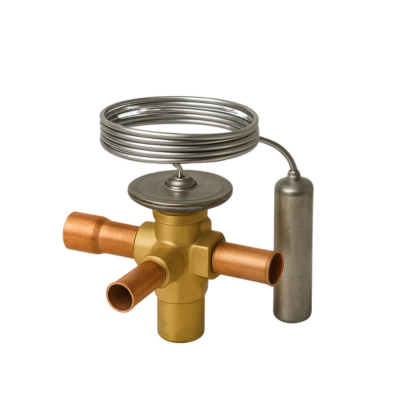
A Thermostatic Expansion Valve (TXV) is a vital component in refrigeration and air conditioning systems, designed to regulate the flow of refrigerant into the evaporator. It maintains optimal superheat by responding to temperature and pressure changes at the evaporator outlet, ensuring efficient heat transfer and preventing liquid refrigerant from returning to the compressor. TXVs help enhance overall system performance, reduce energy consumption, and protect critical components from damage.
Thermostatic Expansion Valves are widely used in residential AC units, commercial refrigeration systems, chillers, and cold storage applications. Known for their durability and reliability, TXVs offer stable performance under a variety of operating conditions. Available in various sizes and configurations, they are compatible with a range of refrigerants and system designs—making them a trusted solution for both new installations and retrofits.

Filter-Driers play a crucial role in HVAC and refrigeration systems by removing moisture, acid, and particulate contaminants from the refrigerant. These components protect compressors and other system parts from corrosion, freezing, and clogging—extending equipment lifespan and ensuring optimal performance. Whether used in air conditioning units, refrigeration systems, or heat pumps, filter-driers help maintain system efficiency and reliability.
Available in both replaceable core and sealed types, filter-driers come in various sizes and designs to suit different system capacities and refrigerant types. They are essential during initial installation, maintenance, or after a compressor burn-out, as they prevent damage caused by impurities in the system. With high moisture-absorption capacity and low pressure drop, filter-driers are a dependable choice for clean, dry, and trouble-free refrigerant flow.

Sight Glass is an essential diagnostic component used in refrigeration and air conditioning systems to visually monitor the flow of refrigerant and detect moisture levels. Installed in the liquid line, it provides a clear indication of system conditions—such as refrigerant charge status, presence of bubbles, and moisture contamination—helping technicians ensure optimal operation and perform quick troubleshooting.
Sight glasses are available in various configurations with features such as moisture indicators, hermetically sealed construction, and high-pressure resistance. These units are widely used in commercial refrigeration systems, industrial chillers, and HVAC applications to improve system visibility and maintenance accuracy. By offering a real-time view into refrigerant quality and flow, sight glasses contribute to efficient system performance and long-term equipment reliability.

Solenoid valves are electromechanically operated devices used to control the flow of liquids or gases in HVAC, refrigeration, and industrial systems. These valves open or close automatically when an electric current is applied to the solenoid coil, offering precise, fast, and reliable flow regulation. They are widely used in applications such as refrigerant control, water treatment, compressed air systems, and automated manufacturing processes.
Solenoid valves are available in a variety of sizes, materials, and configurations—such as normally closed, normally open, direct-acting, and pilot-operated—to suit different pressure ranges and media types. Their compact design, quick response time, and low energy consumption make them ideal for automated and remote-controlled systems. Designed for durability and high performance, solenoid valves help improve system efficiency, safety, and ease of maintenance.
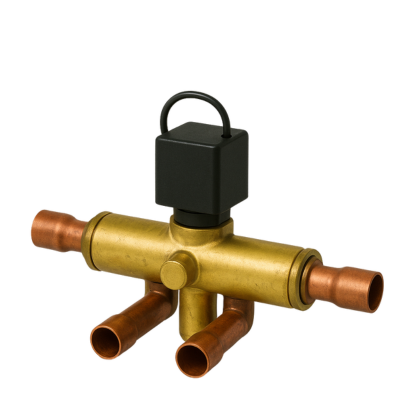
A 4-Way Reversing Valve is a key component in heat pump systems, enabling the switch between heating and cooling modes with ease. By reversing the flow of refrigerant, this valve changes the direction of heat transfer—allowing a single system to provide both heating in winter and cooling in summer. It ensures year-round climate control efficiency in residential, commercial, and industrial HVAC applications.
Built to handle varying pressure conditions and refrigerants, 4-way reversing valves are compact, reliable, and compatible with a wide range of compressor types. Their design allows for smooth operation and minimal energy consumption while maintaining consistent indoor comfort. Whether you’re installing a new heat pump or replacing an existing valve, this component plays a crucial role in enhancing overall system flexibility and performance.
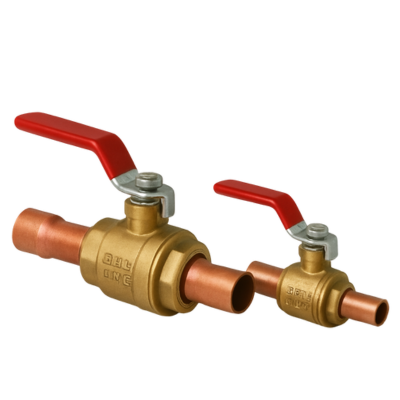
Refrigerant Ball Valves are essential components in refrigeration and HVAC systems, designed to provide secure and leak-proof shut-off for refrigerant flow. Featuring a full port design and a quarter-turn operation, these valves allow for smooth, unrestricted flow and easy isolation of system components during maintenance, installation, or emergency shutdowns. They are suitable for use with various refrigerants, including R-22, R-134a, R-410A, and more.
Built from high-quality brass or stainless steel, refrigerant ball valves offer high durability, corrosion resistance, and pressure tolerance. They are commonly used in commercial chillers, cold rooms, VRF systems, and industrial cooling applications. With features like extended stems for insulation clearance, bi-directional flow, and reliable sealing, these valves enhance system safety, efficiency, and serviceability.