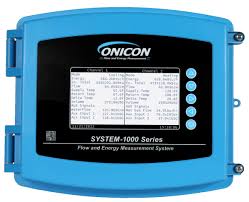
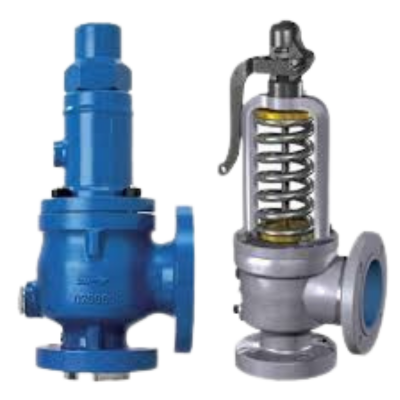
Flow Meters are devices designed to measure the volume or mass of fluid passing through a pipeline over a given period. They are essential for accurate monitoring, process control, and energy management in various industrial, commercial, and residential applications. Flow meters can handle liquids, gases, or steam, depending on the type and construction, and they help optimize system efficiency, reduce wastage, and ensure compliance with operational standards.
BTU Meters (British Thermal Unit meters) are energy measurement devices used to determine the amount of thermal energy delivered or consumed by a fluid in a heating or cooling system. BTU meters are commonly used in HVAC, district heating/cooling, and process industries to monitor energy consumption, calculate costs, and improve energy efficiency. They work by measuring the flow rate and temperature difference of the fluid and converting it into energy units.
At Inventure, we offer a wide range of Flow Meters and BTU Meters designed to provide accurate measurement and energy monitoring for industrial, commercial, and residential applications. Our meters are engineered to ensure precision, reliability, and long-term performance, helping businesses optimize system efficiency and reduce operational costs.
• Measure flow using a rotor or turbine that rotates as fluid passes through. • Ideal for clean liquids and moderate flow applications.
• Measure flow based on the voltage induced by conductive fluids moving through a magnetic field. • Suitable for water, wastewater, and chemical fluids.
• Use sound waves to measure flow velocity. • Non-intrusive and ideal for clean or dirty liquids, often with no moving parts.
• Measure the mass of fluid passing through the system. • Suitable for gases and liquids where accurate mass flow measurement is required.
BTU Meter Construction & Working Principle
• Flow Sensor: Accurately measures the volume or mass flow rate of the fluid passing through the system. • Temperature Sensors: Equipped with two temperature probes to monitor the inlet and outlet fluid temperatures precisely. • Calculator / Transmitter: Computes the thermal energy, usually in kWh, BTU, or GJ, based on the flow rate and temperature difference. • Housing & Materials: Constructed from corrosion-resistant metals or high-quality plastics, with options for digital or analog display interfaces.
Key Benefits
• Provides precise and reliable monitoring of energy consumption in heating and cooling systems. • Assists in optimizing the efficiency of HVAC systems, district energy networks, and industrial processes. • Helps reduce operational costs while ensuring compliance with relevant regulations and standards.. • Easily integrates with building management systems (BMS) or SCADA platforms for centralized monitoring.
Applications
• Used in HVAC systems across residential, commercial, and industrial buildings for energy measurement. • Suitable for district heating and cooling systems to monitor and manage energy flow effectively. •Ideal for process industries that require precise energy monitoring for efficiency and cost control. • Applicable in water treatment plants and chemical processing units where energy measurement is critical. • Supports energy auditing, management systems, and sustainability initiatives to track and reduce consumption.