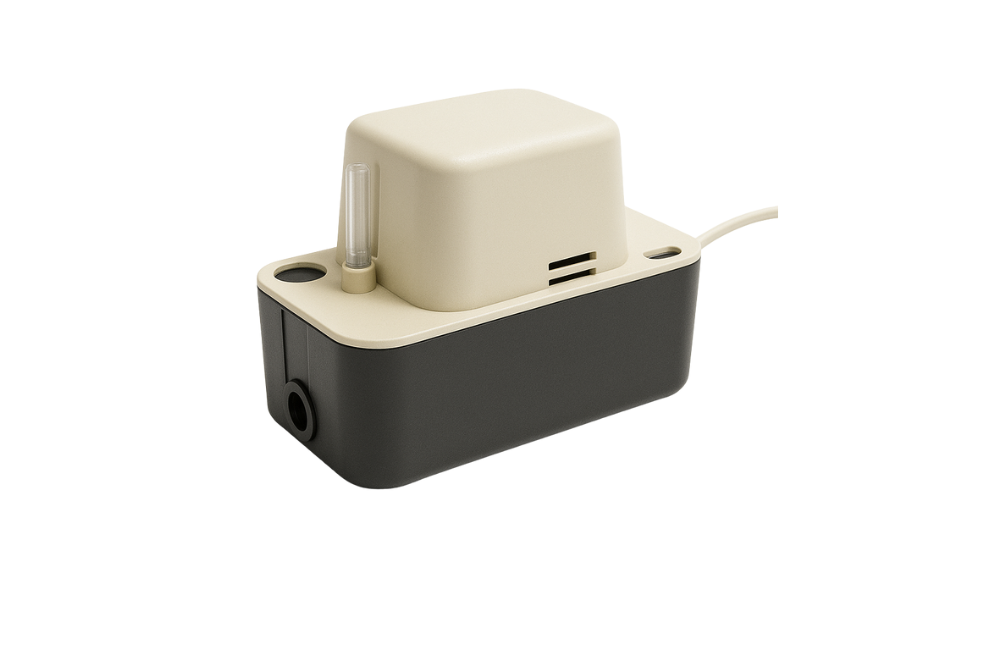
A Condensate Drain Pump is a mechanical device used in HVAC systems to collect and remove condensate water (the by-product of cooling or dehumidification) from air conditioning units, refrigeration equipment, or high-efficiency furnaces. In systems where gravity drainage is not possible—such as in basements, attics, or ceiling-mounted units—a condensate pump becomes essential for moving water to a suitable drain point.
When an HVAC system cools air, moisture from the air condenses on the evaporator coil and drips into a drain pan. The condensate drain pump collects this water in a small internal reservoir. Once the water reaches a certain level, a float switch activates the pump, which then pumps the water through a discharge line to a drain, sink, or external outlet.
Condensate pumps are compact and typically equipped with safety features like overflow shut-off switches, which can shut down the HVAC system if the pump fails or the water overflows. These pumps are widely used in residential air conditioners, commercial split units, fan coil units, and ductless mini-split systems, ensuring proper drainage and preventing water damage or mould growth.
The construction of a condensate drain pump is carefully designed to handle the safe and efficient removal of condensate water from HVAC systems, especially in locations where gravity-based drainage is not feasible. These pumps are typically compact, self-contained units made from durable plastic or corrosion-resistant materials, suitable for continuous exposure to moisture.
At the core of the pump is a collection reservoir or tank, where condensate water from the HVAC unit is first collected. This reservoir is usually made from moulded plastic and is designed to hold a specific volume of water before activation. Mounted inside the reservoir is a float switch assembly, which acts as a sensor. When the water level rises to a predetermined point, the float lifts and triggers the electric pump motor to activate.
The pump mechanism—usually a small centrifugal or diaphragm pump—is powered by an electric motor encased in a sealed, water-resistant housing. The pump draws water from the reservoir and pushes it through a discharge outlet, which is connected to a flexible hose or piping that leads to a drain or disposal point. The motor and electrical components are protected by insulating materials and gasket-sealed enclosures to prevent short circuits or damage from moisture.
Some condensate pumps also include safety features such as an overflow switch, which can shut down the connected HVAC system in case the pump fails or the water exceeds safe levels. Higher-end models may include check valves to prevent backflow and sound insulation to reduce operational noise.
The entire unit is designed for easy installation, maintenance, and long-term reliability, with mounting brackets or feet provided to secure the pump near the air conditioning or furnace system. The robust yet compact construction ensures consistent performance in residential, commercial, and industrial HVAC setups.