

Heat load calculation is a critical step in designing efficient heating, ventilation, and air conditioning (HVAC) systems. It involves determining the amount of heat energy required to maintain desired indoor temperatures under varying environmental conditions. Accurate heat load assessment ensures that HVAC equipment is correctly sized, promoting optimal comfort, energy efficiency, and system longevity. Inventure Qatar offers innovative Design Services in Qatar, delivering creative and functional solutions tailored to meet the unique needs of clients across diverse industries.
The calculation takes into account multiple factors including building size and orientation, construction materials, insulation levels, window types, occupancy, lighting, equipment heat gain, and external climate conditions. Both sensible heat (temperature change) and latent heat (moisture content) are considered to provide a comprehensive understanding of the thermal requirements.
Using industry-standard methodologies and software tools, HVAC engineers perform heat load calculations to estimate peak heating and cooling demands. These calculations guide the selection of appropriate HVAC units, duct sizing, and system controls, preventing issues such as over-sizing or under-sizing, which can lead to energy wastage or inadequate climate control.
Professional heat load calculation is essential for delivering efficient, cost-effective, and comfortable indoor environments, tailored to the specific needs of residential, commercial, or industrial buildings.

HVAC equipment sizing is a vital process in the design and installation of heating, ventilation, and air conditioning systems, ensuring that all components are appropriately matched to the specific thermal and airflow requirements of a building. Correct sizing is crucial to achieve optimal indoor comfort, energy efficiency, and equipment longevity.
The sizing process involves calculating heating and cooling loads based on factors such as building size, layout, insulation, occupancy, lighting, equipment heat gain, and local climate conditions. These calculations determine the capacity of HVAC units, including furnaces, air conditioners, heat pumps, and ventilation systems, required to maintain desired temperature and humidity levels.
Oversized equipment can result in short cycling, increased energy consumption, and premature wear, while undersized units may struggle to maintain comfort, leading to system strain and higher maintenance costs. Therefore, precise equipment sizing balances performance with energy efficiency.
Advanced software tools and industry standards are used by HVAC engineers to analyze load data and select equipment with the right capacity and specifications. Proper ductwork and piping dimensions are also determined during this phase to ensure efficient airflow and fluid transport.
Accurate HVAC equipment sizing is essential to delivering reliable, cost-effective, and sustainable climate control solutions tailored to the unique needs of residential, commercial, or industrial environments.

Quantity takeoff is a crucial process in construction and project management that involves the detailed measurement and listing of materials, components, and labor required to complete a building or infrastructure project. This step forms the foundation for accurate cost estimation, procurement planning, and project scheduling.
During quantity takeoff, professionals systematically analyze architectural and engineering drawings, specifications, and project documents to quantify items such as concrete volumes, steel tonnage, ductwork lengths, piping runs, and electrical wiring lengths. The goal is to generate a comprehensive, itemized list of all materials and quantities needed.
Accurate quantity takeoff enables contractors, estimators, and project managers to prepare realistic budgets, avoid material shortages, and reduce wastage. It also supports effective resource allocation and helps identify potential cost-saving opportunities early in the project lifecycle.
Using digital tools and software, quantity takeoff can be performed with high precision and efficiency, facilitating better communication and coordination among stakeholders.

Our Design Services include comprehensive Stress Analysis to ensure the structural integrity, safety, and reliability of your projects. By applying advanced engineering principles and simulation techniques, we evaluate how components and systems respond to various loads and environmental conditions during the design phase.
Using industry-leading tools such as Finite Element Analysis (FEA), we model stresses, strains, and deformations to identify potential weaknesses and optimize material usage. This proactive approach enables the design of durable, efficient, and compliant structures or mechanical components, minimizing the risk of failure and costly redesigns during construction or operation.
Our stress analysis services cover a wide range of applications including building structures, HVAC components, piping systems, and mechanical assemblies. We collaborate closely with architects, engineers, and project stakeholders to integrate stress analysis insights into the overall design, ensuring safety, performance, and regulatory compliance.
Partnering with us for stress analysis within your design services empowers you to deliver high-quality, resilient projects that meet client expectations and industry standards.

Lighting calculation is a vital process in architectural and interior design that determines the appropriate quantity, placement, and type of lighting fixtures required to achieve optimal illumination levels for various spaces. Accurate lighting calculations ensure visual comfort, energy efficiency, and compliance with relevant standards and regulations.
The calculation considers factors such as room dimensions, surface reflectance, natural light availability, purpose of the space, and the type of light sources used. Using industry-standard methods and software tools like DIALux or Relux, lighting designers calculate illuminance (lux levels), uniformity, and glare control to create effective lighting schemes tailored to residential, commercial, or industrial environments.
Proper lighting calculation supports the selection of fixtures that balance aesthetics with functionality while minimizing energy consumption. It also helps avoid under- or over-lighting, enhancing occupant comfort and productivity.
Professional lighting calculation is essential for creating safe, appealing, and sustainable lighting solutions that meet both user needs and building code requirements.
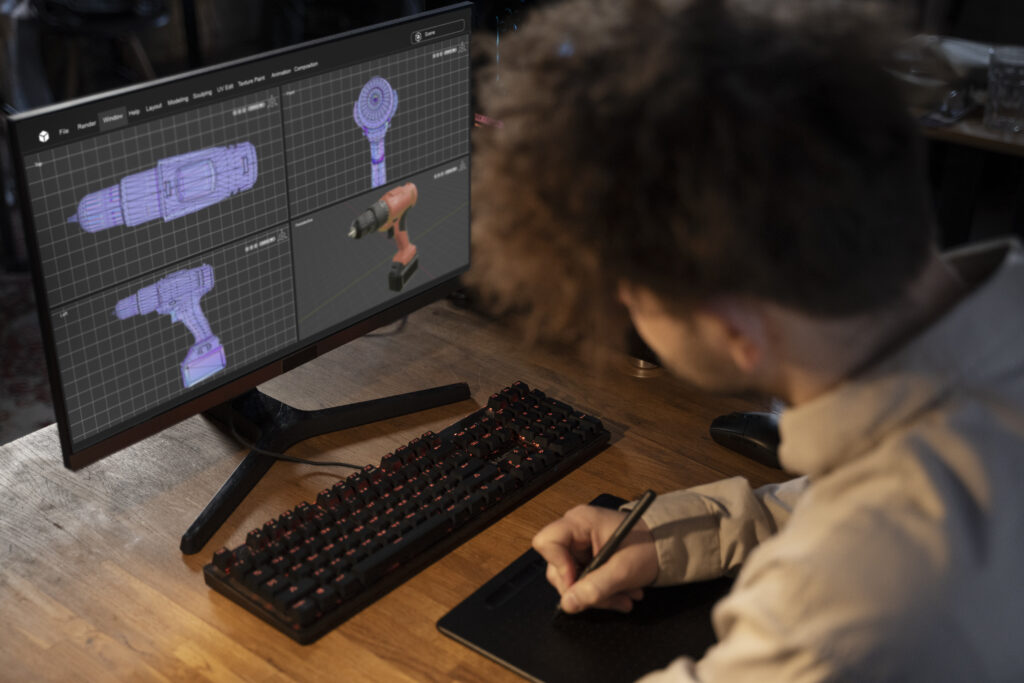
Computational Fluid Dynamics (CFD) Analysis is a powerful simulation technique used to study and predict fluid flow, heat transfer, and related phenomena within complex systems. By solving mathematical equations governing fluid behavior, CFD provides detailed insights into airflow patterns, temperature distribution, and pressure variations, enabling engineers to optimise designs for enhanced performance and efficiency.
In HVAC and building design, CFD analysis helps visualise ventilation effectiveness, identify hotspots, evaluate contaminant dispersion, and improve indoor air quality. It supports decision-making for equipment placement, duct sizing, and airflow balancing to ensure occupant comfort and energy efficiency.
CFD simulations are conducted using specialised software that models real-world conditions, allowing virtual testing before physical implementation. This reduces costly trial-and-error, accelerates development cycles, and ensures compliance with environmental and safety standards.
Professional CFD analysis is an invaluable tool for designing sustainable, efficient, and safe systems across industries such as aerospace, automotive, environmental engineering, and building services.

MEP (Mechanical, Electrical, and Plumbing) Shop Drawing Preparation is a critical phase in construction projects where detailed drawings are developed to illustrate the fabrication, installation, and coordination of MEP systems. These drawings serve as precise blueprints for contractors, fabricators, and installers, ensuring that all components fit correctly within the building structure and comply with design specifications and codes.
The preparation process involves translating design intent from architectural and engineering drawings into detailed, scalable shop drawings that specify dimensions, materials, connection points, equipment locations, and routing of pipes, ducts, conduits, and cables. This facilitates clash detection and coordination among various trades, preventing onsite conflicts and delays.
Our expert drafting team uses advanced CAD and BIM software to create accurate, clear, and compliant shop drawings tailored to the unique requirements of each project. These drawings enable seamless communication between design teams, contractors, and suppliers, supporting efficient project execution and quality assurance.
Professional MEP shop drawing preparation is essential for minimizing construction errors, optimizing resource allocation, and ensuring timely project completion.

MEP (Mechanical, Electrical, and Plumbing) Shop Drawing Preparation is a critical phase in construction projects where detailed drawings are developed to illustrate the fabrication, installation, and coordination of MEP systems. These drawings serve as precise blueprints for contractors, fabricators, and installers, ensuring that all components fit correctly within the building structure and comply with design specifications and codes.
The preparation process involves translating design intent from architectural and engineering drawings into detailed, scalable shop drawings that specify dimensions, materials, connection points, equipment locations, and routing of pipes, ducts, conduits, and cables. This facilitates clash detection and coordination among various trades, preventing onsite conflicts and delays.
Our expert drafting team uses advanced CAD and BIM software to create accurate, clear, and compliant shop drawings tailored to the unique requirements of each project. These drawings enable seamless communication between design teams, contractors, and suppliers, supporting efficient project execution and quality assurance.
Professional MEP shop drawing preparation is essential for minimizing construction errors, optimizing resource allocation, and ensuring timely project completion.

Building Information Modeling (BIM) Services offer advanced digital solutions for creating accurate, data-rich 3D models of buildings and infrastructure projects. BIM models integrate architectural, structural, and MEP (Mechanical, Electrical, Plumbing) components into a unified platform, enhancing design coordination, clash detection, and project visualization.
Our BIM modeling services provide detailed representations of every element within a project, facilitating collaboration among architects, engineers, contractors, and stakeholders throughout the project lifecycle. By leveraging BIM technology, we enable improved decision-making, reduced errors, optimized construction planning, and cost control.
From initial conceptual designs to as-built documentation, our BIM experts utilize industry-leading software such as Revit, Navisworks, and AutoCAD to deliver precise and scalable models tailored to your project’s requirements. Our services also support facility management and maintenance by embedding essential data within the model.
Partnering with us for BIM modeling services ensures enhanced project efficiency, better risk management, and successful delivery of complex construction projects.
We provide complete MEP installation, maintenance, and plumbing services for residential, commercial, and industrial projects.
Yes, we offer annual maintenance contracts (AMC) for all MEP systems with regular checkups and emergency support.
Our plumbing services include installation, repairs, drainage systems, leak detection, and water tank setups.
Our team responds quickly to urgent maintenance needs to minimize downtime and ensure system reliability.