
Dismantling Joint

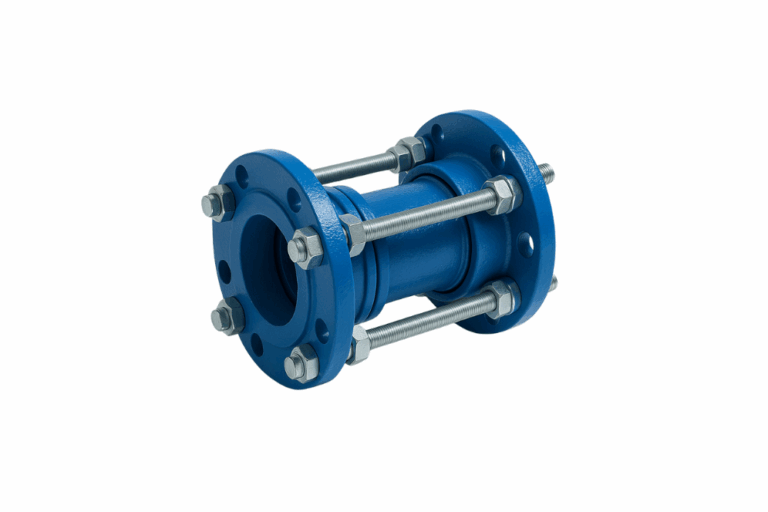
Inventure offers high-quality dismantling joints designed to simplify the installation, maintenance, and replacement of valves, pumps, and other pipeline components. These joints provide the flexibility needed to adjust, align, and disassemble sections of pipelines without major disruption, making them a critical component in water, wastewater, and industrial piping systems.

Dismantling Joints are used in all pipe systems to facilitate the assembly and disassembly of flanged valves or similar equipment. It provides ease of disassembly by taking the axial forces on the valve in the pipeline. During assembly and disassembly, the required working area is created by shortening the dismantling joint by +, – 40mm. Our dismantling joints are manufactured as semi-rigid. On request, it is produced in full rigid and telescopic type. Rigid type design dismantling joints allow mounting without additional bolts and nuts.

Key Features

Flexible Design: Allows axial movement, making it easier to install or remove valves, pumps, or other pipeline components.
Durable Materials: Manufactured from ductile iron, stainless steel, or other corrosion-resistant materials to withstand high pressure and harsh environmental conditions.
Simple Installation: Designed for quick and secure connection between flanges, reducing downtime during maintenance.
Adjustable Lengths: Can accommodate slight misalignments and provide additional flexibility in tight piping layouts.

Construction:

Material Structure: Body Pipe: Ductile Iron

Stud and Nut: Steel Galvanized

Connection: Flanged

Operating Temperature: – from 10 ° C to + 80 ° C

Pressure Class: PN10 / PN16

Sealing Ring: EPDM

Nominal Diameter: DN100 (4 ”) – DN2000 (80”)

Applications:

– Heating, ventilation and air conditioning systems

– Water treatment and distribution systems

– Mining industry

-Ship construction and drilling facilities

-Chemical and petrochemical plants

– Food and chemical enterprises

– Oil and gas processes

– Fire extinguishing systems

Main Components of a Process Chiller

An Industrial Process Chiller is made up of several essential components that work together to regulate temperature and ensure smooth operation. Each part plays a crucial role in the refrigeration cycle:
  1. Compressor:
    This is the heart of the chiller. It compresses the refrigerant gas, increasing its pressure and temperature so it can move through the system efficiently. Types of compressors include scroll, screw, reciprocating, and centrifugal, depending on the chiller’s capacity and design.
  2. Evaporator:
    The evaporator is where the process fluid (such as water or glycol) passes through and loses its heat to the refrigerant. This is where heat absorption occurs, and the refrigerant turns into a gas.
  3. Condenser:
    After compression, the hot refrigerant gas flows into the condenser. In this component, the heat is removed either by air (air-cooled) or water (water-cooled), and the refrigerant changes back into a liquid.
  4. Expansion Valve:
    The expansion valve regulates the flow of refrigerant into the evaporator. It reduces the pressure and temperature of the liquid refrigerant before it re-enters the evaporator to absorb more heat.
  5. Process Pump & Reservoir:
    A circulation pump pushes the cooled fluid to the process and brings the warmed fluid back to the chiller. The reservoir holds the process fluid and acts as a buffer to handle thermal loads.
  6. Control System:
    Modern chillers come with advanced control panels and sensors that monitor and regulate temperatures, flow rates, pressures, and operating parameters for safety, efficiency, and precision.
    Together, these components form a reliable and energy-efficient system that keeps industrial operations stable, regardless of heat-generating activities within the facility.
Subscription Form