
Vibration Isolators

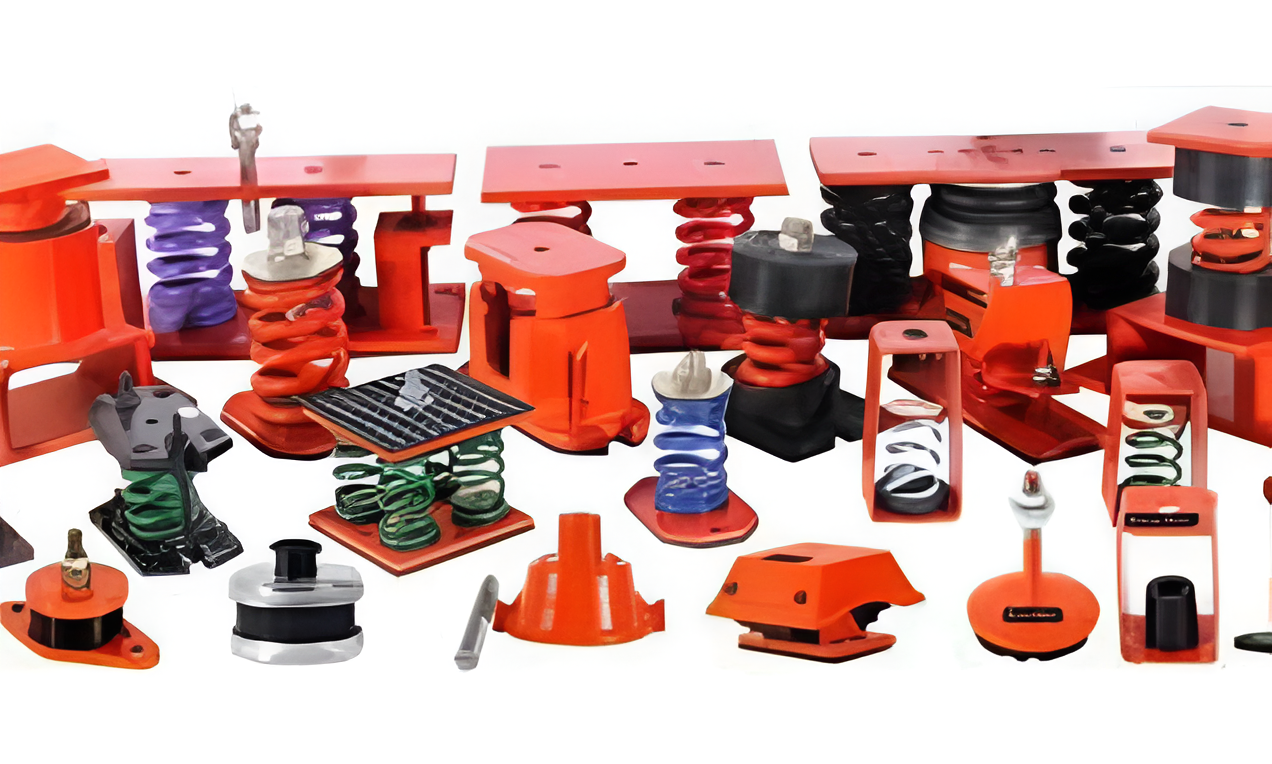
At Inventure, we offer a wide range of vibration isolation solutions from Easyflex – India, designed to minimise noise, reduce vibration transmission, and protect mechanical equipment and building structures. These products are suitable for HVAC systems, pumps, fans, compressors, and industrial equipment, ensuring optimal performance, safety, and longevity.


Rubber & Elastomeric Solutions

1. Anti-Vibration Pads

Function: Absorb vibration and shock generated by static and moderately dynamic loads, preventing direct transmission to supporting structures.
Applications:Widely used under HVAC equipment, pumps, generators, and machinery foundations in commercial and industrial installations.
Benefits: Reduces vibration transfer to floors and building structures, improves operational stability, enhances comfort levels, and increases equipment service life.

2. Rubber Grommet Mounts

Function: Isolate vibration from sensitive equipment and piping systems by providing flexible cushioning.
Applications: Suitable for electrical panels, small pumps, control panels, and precision instrumentation.
Benefits:Flexible, durable, and easy to install; prevents vibration-induced damage, reduces noise, and protects delicate components.

3. Rubber Hangers

Function: Support and suspend equipment while isolating vibration and structure-borne noise.
Applications: Used for piping, ductwork, and suspended HVAC components in buildings.
Benefits: Minimises vibration transmission to ceilings and structural elements, improving acoustic comfort and system reliability.

4. Spring & Rubber Hangers

Function: Combine the elasticity of springs with the damping characteristics of rubber for enhanced vibration and noise control.
Applications: Applied to HVAC ducting, piping systems, and suspended mechanical equipment.
Benefits: Provide superior vibration isolation for medium to heavy equipment, ensuring quiet operation and reduced structural impact.

Spring-Based Mounts & Isolators

5. Cased Spring Mounts

Function:Provide vibration isolation using steel springs enclosed within a protective casing.
Applications: Used for pumps, fans, and compressors in industrial and commercial environments.
Benefits: Protects springs from dust, moisture, and corrosion while effectively reducing vibration and noise transmission.

6. Closed Spring Isolators

Function: Encased spring systems designed for isolating heavy mechanical loads.
Applications:Ideal for chillers, large pumps, cooling towers, and heavy fans.
Benefits: High load capacity, long service life, and reliable vibration isolation for heavy-duty installations.

7. Cup Spring Mounts

Function:Compact spring isolators designed for precise and controlled vibration isolation.
Applications: Used with small to medium pumps, compressors, and fans where space is limited.
Benefits: Deliver high-performance vibration isolation in a compact footprint, making them ideal for tight installation spaces.

8. Enclosed Spring Isolators

Function: Fully enclosed spring systems providing protection and long-term performance.
Applications: Suitable for HVAC systems, industrial machinery, and vibration-sensitive equipment.
Benefits: Durable, low-maintenance solution capable of handling heavy vibration loads with consistent performance.

9. Heavy Duty Closed Spring Isolators

Function: Specifically engineered for very large and heavy equipment.
Applications:Used for large pumps, chillers, compressors, and heavy industrial machinery.
Benefits:Capable of handling extreme loads while delivering effective vibration and shock isolation.

10. Open Spring Mounts

Function: Non-encased spring isolators designed for general-purpose vibration control.
Applications: Installed under pumps, fans, motors, and rotating equipment.
Benefits: Cost-effective, simple to install, and suitable for standard vibration isolation requirements.

11. Spring & Viscous Dampers

Function: Combine spring isolation with viscous damping to control both vibration and resonance.
Applications: Applied in high-dynamic systems such as HVAC fans, pumps, and compressors.
Benefits: Effectively reduces vibration amplitude, limits movement, and minimises noise transmission.

12. Spring Hangers

Function: Suspend equipment while isolating vertical vibrations.
Applications: Used for piping, ducting, and suspended machinery in building services.
Benefits: Maintains proper alignment of suspended systems while reducing vibration transfer to structures.

13. Spring Isolators with Vertical Stop Units

Function:Provide vertical vibration isolation while preventing excessive movement during abnormal conditions.
Applications: Installed for large HVAC systems, chillers, and heavy industrial equipment.
Benefits:Enhances safety, protects equipment from over-travel, and ensures stability under extreme loads.

14. SS Enclosed Spring Isolators

Function:Stainless steel enclosed spring systems designed for corrosive and harsh environments.
Applications:Used in marine, offshore, coastal, and chemical plant installations.
Benefits: Corrosion-resistant, highly durable, and reliable for long-term vibration isolation in extreme operating conditions.

Applications Across Industries

  1. Used for fans, air handling units, chillers, and ducting to control vibration, minimise noise transmission, and protect connected building structures from dynamic loads.
  2. Applied to pumps, compressors, and rotating machinery to isolate operational vibrations, reduce mechanical stress, and ensure smooth and stable performance.
  3. Installed in hospitals, data centres, offices, and factories where vibration and noise control are critical for equipment reliability, occupant comfort, and structural safety.
  4. Used for equipment exposed to continuous motion, heavy loads, and corrosive environments, ensuring vibration isolation, durability, and long-term operational stability.

Benefits of Easyflex Vibration Isolators

  1. Effectively reduces vibration transmission to building structures, protecting foundations, floors, and supporting frameworks from fatigue and long-term damage.
  2. Minimises wear and tear on mechanical components by absorbing shock and vibration, thereby extending the operational life of pumps, fans, compressors, and other equipment.
  3. Significantly lowers noise levels by isolating vibration at the source, improving acoustic comfort in sensitive environments such as hospitals, offices, and residential buildings.
  4. Enhances overall operational efficiency by stabilising mechanical systems, reducing misalignment, and ensuring smoother and more reliable equipment operation.
  5. Designed in accordance with international standards, ensuring safe operation, high reliability, and compliance with performance and quality requirements.

Main Components of a Process Chiller

An Industrial Process Chiller is made up of several essential components that work together to regulate temperature and ensure smooth operation. Each part plays a crucial role in the refrigeration cycle:
  1. Compressor:
    This is the heart of the chiller. It compresses the refrigerant gas, increasing its pressure and temperature so it can move through the system efficiently. Types of compressors include scroll, screw, reciprocating, and centrifugal, depending on the chiller’s capacity and design.
  2. Evaporator:
    The evaporator is where the process fluid (such as water or glycol) passes through and loses its heat to the refrigerant. This is where heat absorption occurs, and the refrigerant turns into a gas.
  3. Condenser:
    After compression, the hot refrigerant gas flows into the condenser. In this component, the heat is removed either by air (air-cooled) or water (water-cooled), and the refrigerant changes back into a liquid.
  4. Expansion Valve:
    The expansion valve regulates the flow of refrigerant into the evaporator. It reduces the pressure and temperature of the liquid refrigerant before it re-enters the evaporator to absorb more heat.
  5. Process Pump & Reservoir:
    A circulation pump pushes the cooled fluid to the process and brings the warmed fluid back to the chiller. The reservoir holds the process fluid and acts as a buffer to handle thermal loads.
  6. Control System:
    Modern chillers come with advanced control panels and sensors that monitor and regulate temperatures, flow rates, pressures, and operating parameters for safety, efficiency, and precision.
    Together, these components form a reliable and energy-efficient system that keeps industrial operations stable, regardless of heat-generating activities within the facility.
Subscription Form